
Zuzuva — Multi-Vendor Marketplace
A seller platform, a catalogue and a merchandising engine in one build

- Client
- Zuzuva
- Delivered
- 27 May 2025
- Deliverables
- 7 line items
- Stack
- 7 technologies
The brief
A marketplace is not a shop with more products in it. A shop has one seller, one inventory and one definition of a good result. A marketplace has to keep many sellers' catalogues, stock and orders separate while presenting them to a buyer as one coherent store — and it has to decide, on every listing page, whose product goes first.
What we built
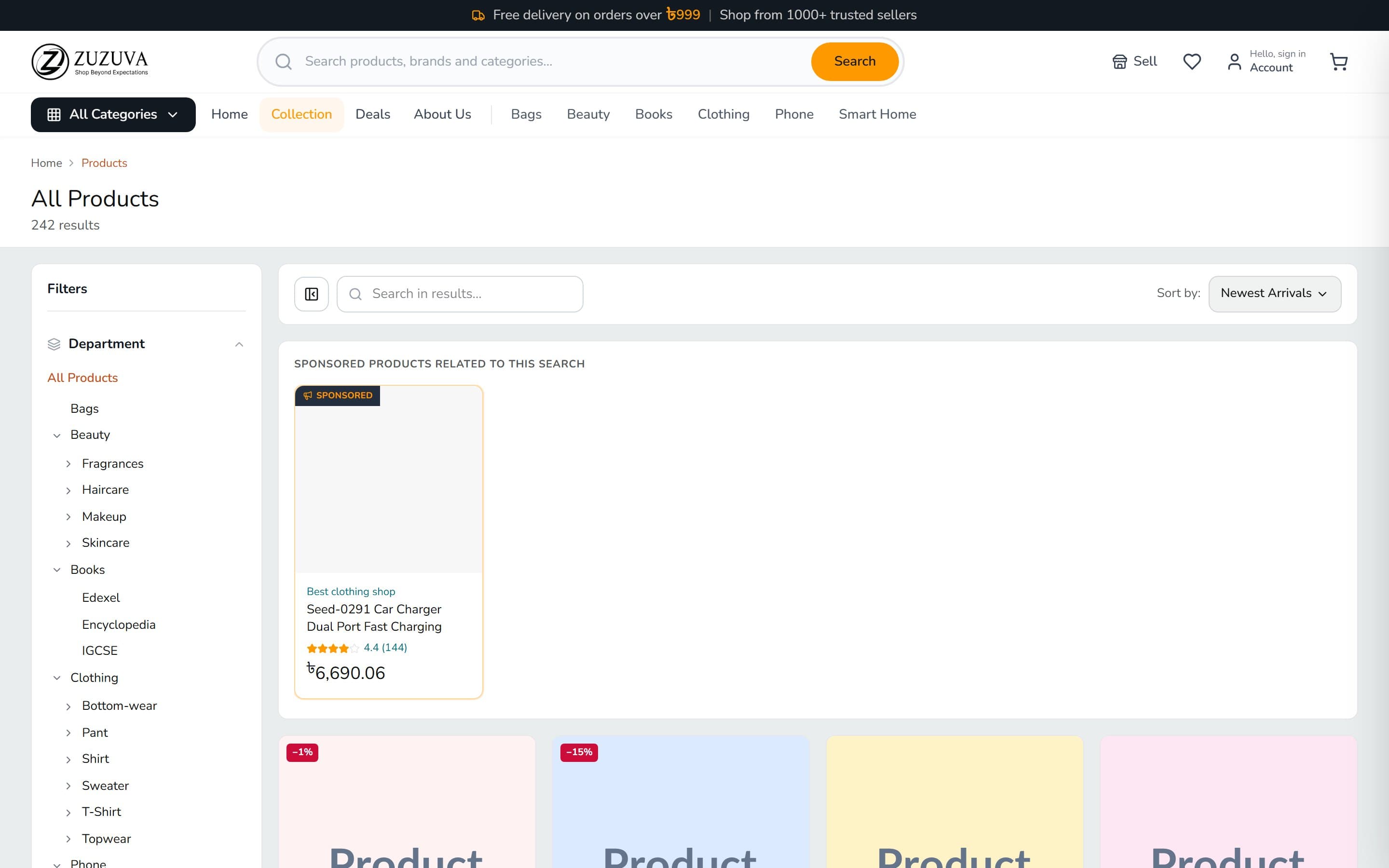
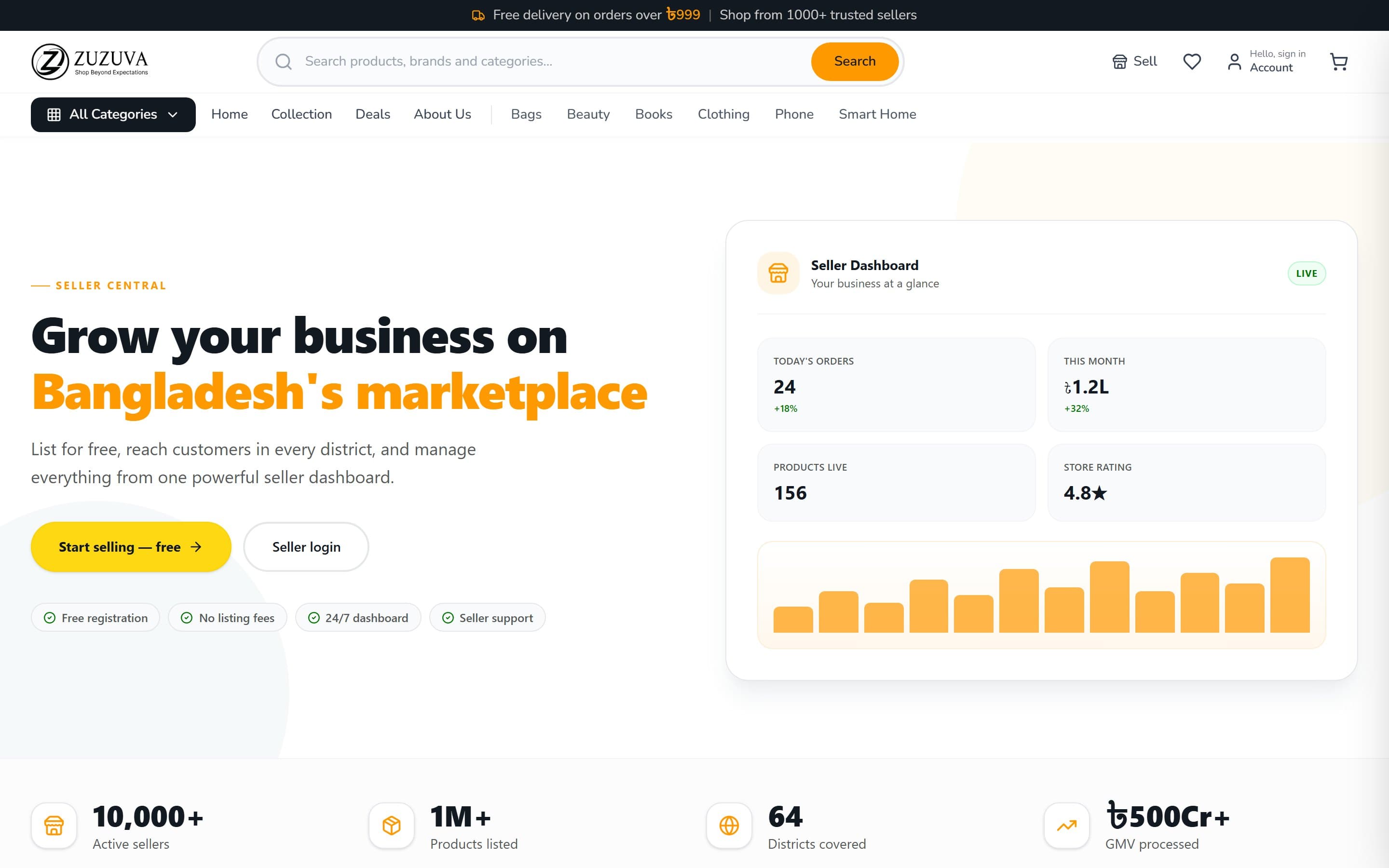
Sellers register through Become a Seller and get their own catalogue and order management behind it, so a seller's own operations never touch another's. On the buyer side the same inventory is presented as one store: category browsing, faceted filters, and product pages with media galleries and variants.
Merchandising is the product
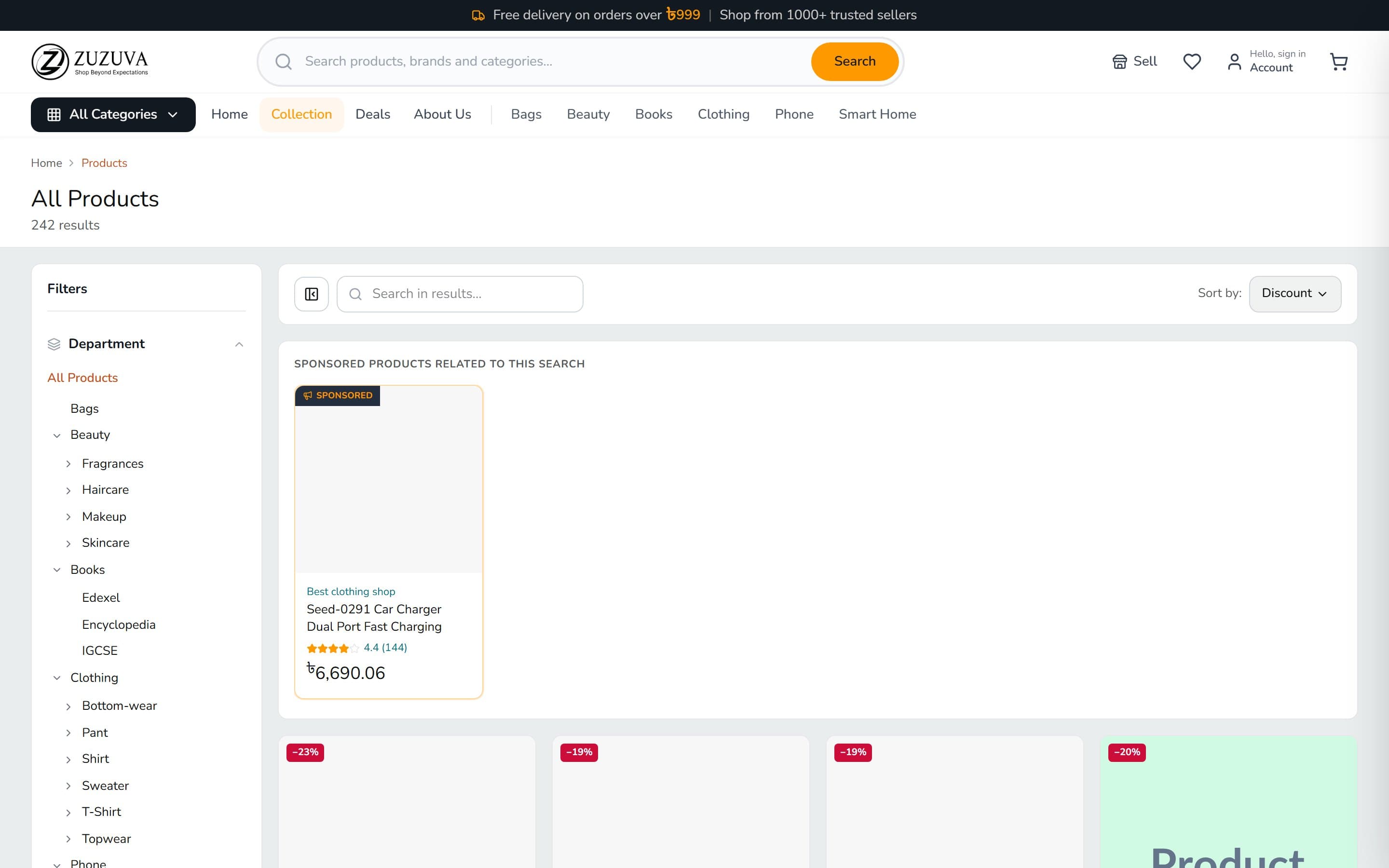
Ordering is the lever a marketplace actually pulls, so there are four of them rather than one default: recommended, best selling, newest, and biggest discount — each addressing a different shopper. Sponsored placement runs alongside as its own rail, which is how a marketplace makes money on attention rather than only on margin. Wishlist and cart complete the buyer loop.
Why it is not a theme
Multi-tenancy is a data-model decision, not a template one. Seller ownership, stock and order routing had to be right in the schema from the beginning — retrofitting it onto a single-seller store means rewriting every query that touches a product.
Where it landed
Sellers onboard and manage their own catalogue; buyers see one store with four ways to sort it and a sponsored rail beside them.
02Screens
Next step
Have a problem shaped like this one?
Send the constraint and the deadline. We will tell you within a day whether it is deliverable and what it would take.
or email info@strsltd.com. We reply to every inquiry within one business day.